
Catégories
Nouveau blog
Phosphine (PH₃) Sensor Selection Guide: How to Choose the Right Gas Monitoring Solution for Your Application
August 31 , 2026
Phosphine (PH₃) is a colourless, pungent and highly toxic gas, as well as a strong reducing agent. Its toxic threshold limit value (TVL) is below 0.3 ppm. Any leakage can cause severe damage to the central nervous system. For this reason, real-time phosphine monitoring is critical for industrial safety, agricultural production and environmental protection.
With numerous PH₃ sensors available on the market, how do you make the right choice? This practical selection guide covers key dimensions to support your decision-making.
PH₃ sensors are mainly deployed in three major fields, each with distinct range and accuracy demands:
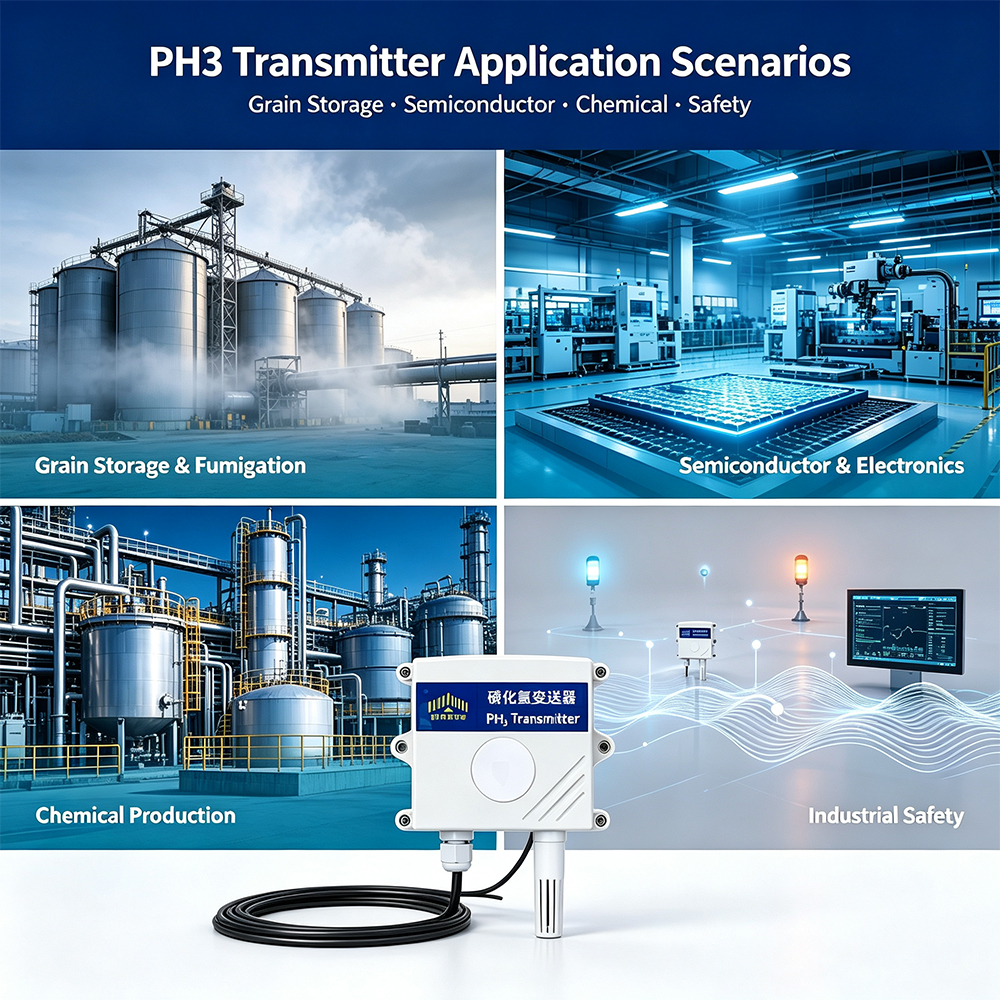
Three technical parameters deserve close attention during sensor selection:
|
Metric |
Description |
Selection Recommendation |
|
Accuracy |
High-precision instruments typically feature errors of ±1%~±3% for reliable detection of trace leaks; low-precision units may show errors of ±5%~±10%. |
High-precision models are recommended for safety-critical areas such as grain silos and chemical workshops. |
|
Measurement Range |
Common ranges include 0-10 ppm, 0-20 ppm and 0-1000 ppm. |
Select according to the actual potential leakage concentration. Excessively large ranges will compromise low-end resolution. |
|
Response Time |
Industrial-grade PH₃ sensors normally achieve a T90 response time ≤ 60 s; premium models can reach ≤ 30 s. |
Faster response enables early-stage alarm upon gas leakage. |
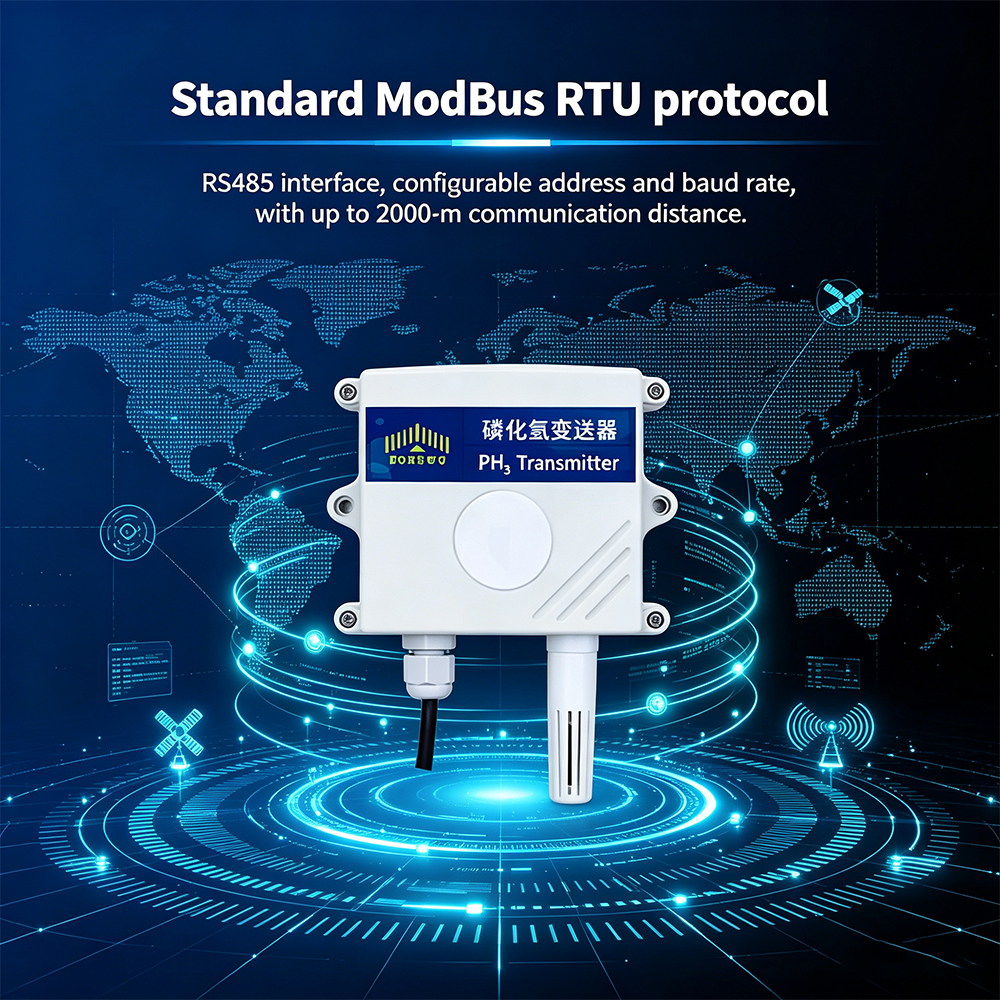
For industrial automation, sensor output directly determines compatibility with PLCs, DCS, industrial PCs and other systems. RS485 digital output paired with the Modbus-RTU protocol is the mainstream solution for industrial gas monitoring, offering the following benefits:
For projects integrating with existing monitoring systems, prioritise RS485 + Modbus-enabled sensors to significantly reduce integration complexity and costs.
PH₃ monitoring often takes place in harsh conditions: high humidity inside grain silos, corrosive vapours in chemical plants, and outdoor installations requiring dust-proof and waterproof performance. Pay attention to:
Aligning with the above-mentioned selection criteria, the PH3 (RS485) phosphine sensor is a viable option:

Tél : +86 18146178586
Whatsapp : +86 18146178586
E-mail : qui@zonewu.com
Ajouter : 1501-3, Building F03, Phase III, Software Park, Jimei District, Xiamen City, Fujian Province, China