
Catégories
Nouveau blog
Comment prévenir les fuites d'hydrogène ? Les capteurs d'hydrogène LoRaWAN assurent une surveillance précise pour garantir la sécurité dans de nombreuses situations.
January 07 , 2026Avec l'utilisation à grande échelle de l'énergie hydrogène dans des domaines tels que le stockage de l'énergie, la production industrielle et les énergies nouvelles, les risques pour la sécurité liés aux fuites d'hydrogène sont devenus de plus en plus importants. Capteur d'hydrogène LoRaWAN Lancée par ZONEWU et basée sur le principe de la détection électrochimique à trois électrodes, cette technologie intègre une acquisition de données de haute précision, une transmission sans fil et des fonctions d'alerte précoce intelligentes. Grâce à sa haute sensibilité et à sa grande stabilité, elle est devenue un dispositif essentiel pour la surveillance de la sécurité de l'hydrogène dans divers secteurs industriels, répondant précisément aux exigences de sécurité dans de multiples situations.
Sécurité du stockage d'énergie : Renforcer les défenses du stockage de l'énergie hydrogène et des batteries
Les systèmes de stockage d'énergie par batteries lithium et piles à combustible à hydrogène, par exemple, sont sujets aux fuites d'hydrogène dues à des défaillances d'équipement, à la surcharge et à la surchauffe. Lorsque la concentration dépasse le seuil critique, un risque d'explosion existe. Ce capteur, doté d'une plage de mesure de l'hydrogène de 0 à 1 000 ppm et d'une haute résolution de 1 ppm, détecte avec précision les fuites infimes et permet une alerte précoce. Il prend en charge des seuils supérieurs et inférieurs personnalisables pour l'hydrogène (1 à 65 535 ppm). En cas de dépassement du seuil, il peut être connecté à la sortie d'un transistor DO pour déclencher une alarme locale ou une coupure de courant, bloquant ainsi les dangers à la source. Grâce à la technologie de transmission à distance LoRaWAN, il couvre de vastes sites de stockage d'énergie, permettant aux gestionnaires de superviser de manière centralisée les données multipoints via une plateforme, sans intervention sur site, ce qui améliore considérablement l'efficacité de la gestion. Son alimentation à large plage de tension (5-28 V CC) est adaptée aux environnements d'alimentation complexes des systèmes de stockage d'énergie, garantissant un fonctionnement stable 24 h/24.
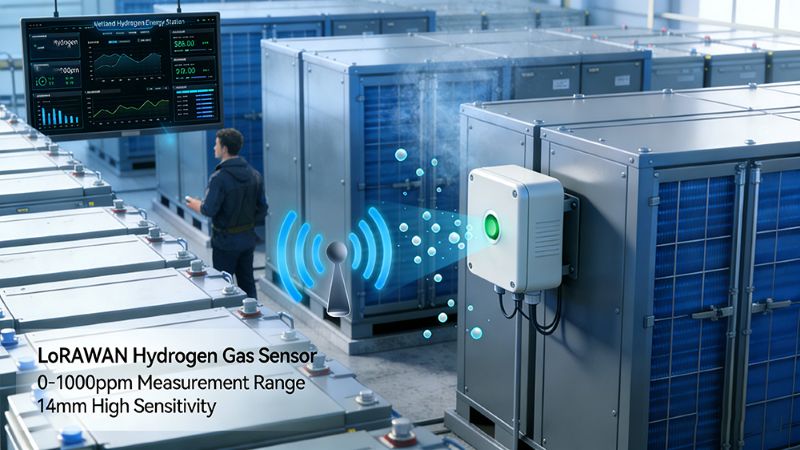
Scénario de production industrielle : Barrières de sécurité adaptées aux conditions de travail difficiles
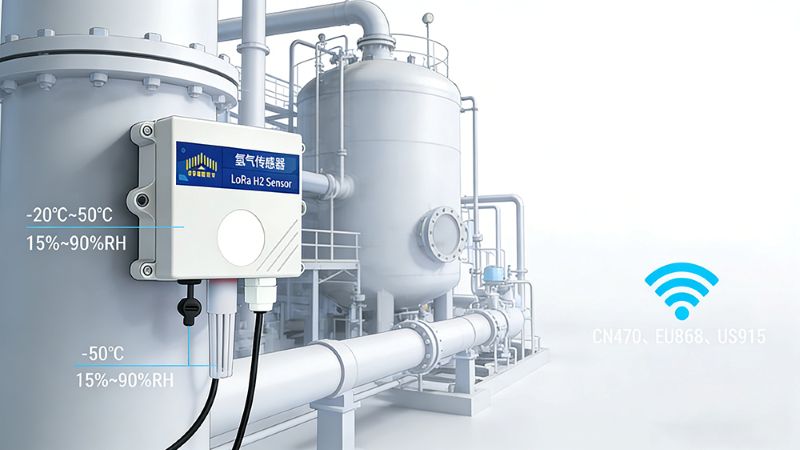
Dans des secteurs tels que l'industrie chimique, la production d'hydrogène et la métallurgie, l'hydrogène, qu'il soit matière première ou sous-produit, présente des risques de fuite tout au long des processus de production, de stockage et de transport. Le capteur, doté d'un microprocesseur haute performance et d'une conception anti-interférences, fonctionne de manière stable dans des environnements industriels difficiles, avec des températures allant de -20 °C à 50 °C et une humidité relative de 15 % à 90 % (sans condensation). Il est insensible aux interférences électromagnétiques et aux autres gaz. Son cycle de rapport par défaut est de 5 minutes (réglable de 1 à 65 535 secondes). En cas d'anomalie, il effectue trois rapports continus automatiques afin de garantir une intervention rapide du personnel. Compatible avec plusieurs bandes de fréquences internationales (CN470, EU868 et US915), il s'adapte parfaitement aux besoins des projets industriels transnationaux. L'absence de réglages ou de remplacements liés aux différences régionales permet de réduire les coûts d'acquisition et de maintenance.
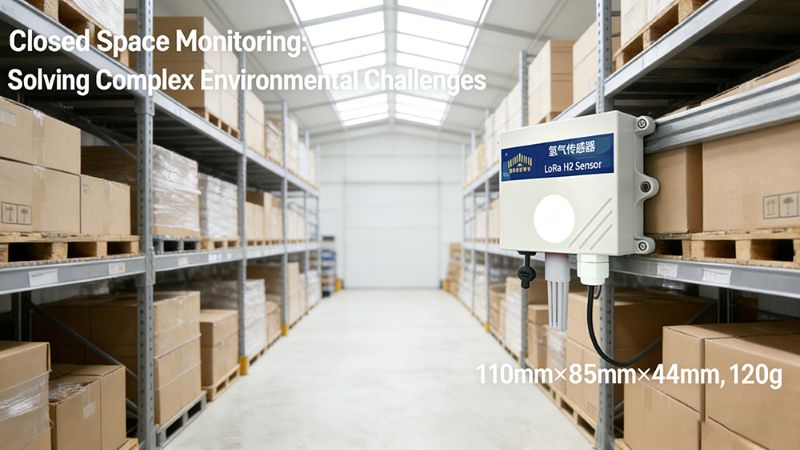
Surveillance des espaces confinés : résoudre les difficultés liées à la surveillance des environnements complexes
Les canalisations d'hydrogène souterraines, les tunnels, les entrepôts étanches et autres espaces confinés présentent une ventilation insuffisante, favorisant l'accumulation d'hydrogène. De plus, l'installation et la maintenance des capteurs filaires traditionnels sont complexes. Ce capteur, avec ses dimensions de seulement 110 mm × 85 mm × 44 mm et son poids de 120 g, est compact et léger, permettant une installation flexible même dans les espaces restreints. Sa conception sans fil élimine le besoin de câblage complexe, et sa faible consommation d'énergie assure un fonctionnement prolongé, réduisant considérablement la charge de travail lors de la construction et de la maintenance. Il est doté d'un indicateur LED vert intégré : le clignotement indique la connexion au réseau, tandis que l'éclairage fixe confirme la réussite de la connexion, facilitant ainsi le dépannage rapide des pannes réseau par le personnel sur site. Compatible avec l'accès au réseau OTAA et les modes de fonctionnement de classe A/C (classe C par défaut), il garantit une transmission du signal stable et un relevé de données précis, même dans les environnements confinés à faible signal.
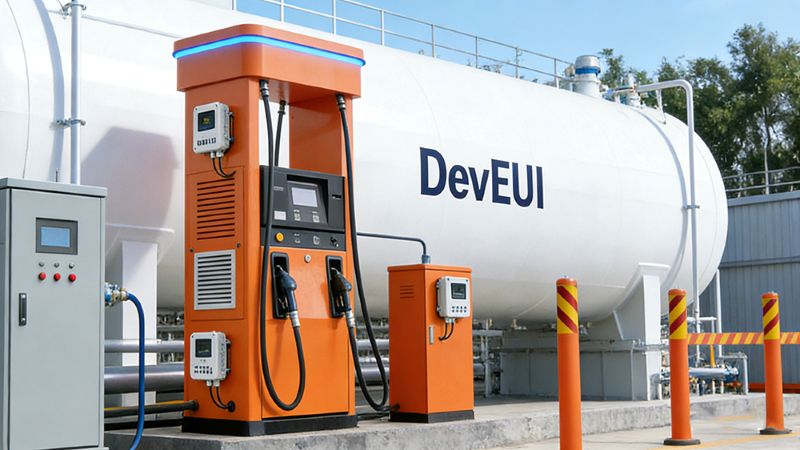
Normalisation de la surveillance environnementale : adaptation au contrôle de sécurité multidomaine
Les applications nécessitant une surveillance régulière de la concentration en hydrogène, comme les instituts de recherche scientifique et les stations de ravitaillement, imposent des exigences extrêmement élevées en matière de précision et de stabilité des capteurs. Ce capteur, basé sur le principe de détection électrochimique, offre une grande précision de mesure et une faible dérive. Il peut être calibré à zéro tous les 6 à 12 mois via la commande FE14EF afin de garantir la fiabilité des données à long terme. L'interface USB-C intègre les fonctions de configuration et d'alimentation. Grâce à un outil de configuration dédié pour Windows, il est possible d'ajuster avec précision des paramètres tels que les cycles d'acquisition et de rapport de données, afin de répondre aux besoins de surveillance personnalisés de différentes applications. L'appareil est livré avec des paramètres prédéfinis (DevEUI et AppEUI) et prend en charge les modifications personnalisées. Il peut être rapidement connecté aux réseaux LoRaWAN existants, assurant ainsi un déploiement rapide.

Tél : +86 18146178586
Whatsapp : +86 18146178586
E-mail : qui@zonewu.com
Ajouter : 1501-3, Building F03, Phase III, Software Park, Jimei District, Xiamen City, Fujian Province, China